हिंदी में…
आचार्य सुश्रुत के 14 अनुशस्त्र में जलोका को श्रेष्ठ माना गया है।
(“जलोका अनु शस्त्रानाम्” – चरक सूत्र 25)
राजा, सुकुमार, बालक, वृद्ध, जिसको शस्त्र से डर लगे, ऐसे लोगों में रक्तमोक्षण करने के लिए जलोका को सबसे ज्यादा उपयोगी एवं रक्तमोक्षण की मृदु विधि माना गया है।
जलोका के प्रकार
सुश्रुत संहिता में जलोका के 12 प्रकार बताए गए हैं जिनको सविष और निर्विष करके 2 भागों में बांटा गया है।
सविष जलोका के नाम:
- कृष्णा
- कर्बुरा
- अलगर्दा
- सामुद्रिका
- गोचन्दना
- इंद्रायुद्धा
निर्विष जलोका के नाम:
- कपिला
- पिंगला
- मुशिका
- शंकुमुखी
- पुंडरीकमुखी
- सावरिका
सविष जलोका के काटने पर सुई चुभोने जैसी पीड़ा, कण्डू, दाह, मूर्च्छा शोथ, ज्वर के लक्षण मिलते हैं, जिसकी चिकित्सा में आचार्य सुश्रुत ने “महागद” नामक औषधि का नस्य, पान, आलेपन प्रयोग किया है।
सविष जलोका दंश में आचार्य वागभट्ट ने “विष पित्त रक्त हर” चिकित्सा करने की बात की है।
आचार्य हारीत के अनुसार जलोका के 4 प्रकार हैं:
- कालिका
- धूम्रा
- रोहिणी
- इंद्रायुद्धा
जलोका का प्रमाण
आचार्य सुश्रुत ने निर्विष जलोका सावरिका का प्रमाण 18 अंगुल माना है और इसका प्रयोग केवल पशुओं में रक्तमोक्षण के लिए किया जाता है।
आचार्य वागभट ने जलोका का अधिकतम प्रमाण 18 अंगुल माना है, और मनुष्यों में प्रयुक्त होने वाली जलोका का प्रमाण 4, 5, 6 अंगुल ही माना है।
जलोका संग्रह विधि
आचार्य सुश्रुत मतानुसार यवन, पांड्य, सह्या, पोतन इस देश की जलोका को संग्रहित करना चाहिए और ऐसी निर्विष जलोका जो, महाशना, महाशारिरा, शीघ्रता से रक्त पान करने वाली हो, इस तरह की जलोका रक्तमोक्षण के लिए श्रेष्ठ होती है।
आचार्य वागभट्ट ने जलोका संग्रह करने के लिए श्रेष्ठ ऋतु शरद ऋतु बताया है, क्योंकि शरद ऋतु में तालाब के जल स्वच्छ होते हैं और निर्विष जलोका स्वच्छ, सुगंधित जल में ही पाई जाती है।
जलोका को संग्रहित करके एक पानी वाले घड़े में रखते हैं और उसके खाने-पीने की वस्तुओं को घड़े में डाल देते हैं। जलोका पालन करते समय ध्यान रखें कि:
- घड़े का पानी 3-3 दिन में बदल दिया करें।
- घड़ा 7-7 दिन में बदल दिया करें।
आचार्य वागभट्ट ने घड़ा 5-5 दिन में बदलने की बात कही है।
जलोका अवचारण विधि
जलोका विशेष रूप से पित्त दूषित रक्त का रक्तमोक्षण करती है।
जिस रोगी में जलोका लगानी हो, तो सबसे पहले रोगी का स्नेहन स्वेदन कर लेते हैं। उसके पश्चात संग्रहित जलोका को सुश्रुत ने हल्दी सरसों के कल्क का लेप लगाने को बताया। हल्दी सरसों लेप से जलोका विगत क्लम हो जाती है।
आचार्य वागभट्ट ने हल्दी सरसों के जल में जलोका को डालने के लिए कहा। हल्दी सरसों के जल में डालने से जलोका का कोष्ठ शोधन हो जाता है जिसके कारण उसकी भूख बढ़ जाती है और भली भांति रक्त पान करती है।
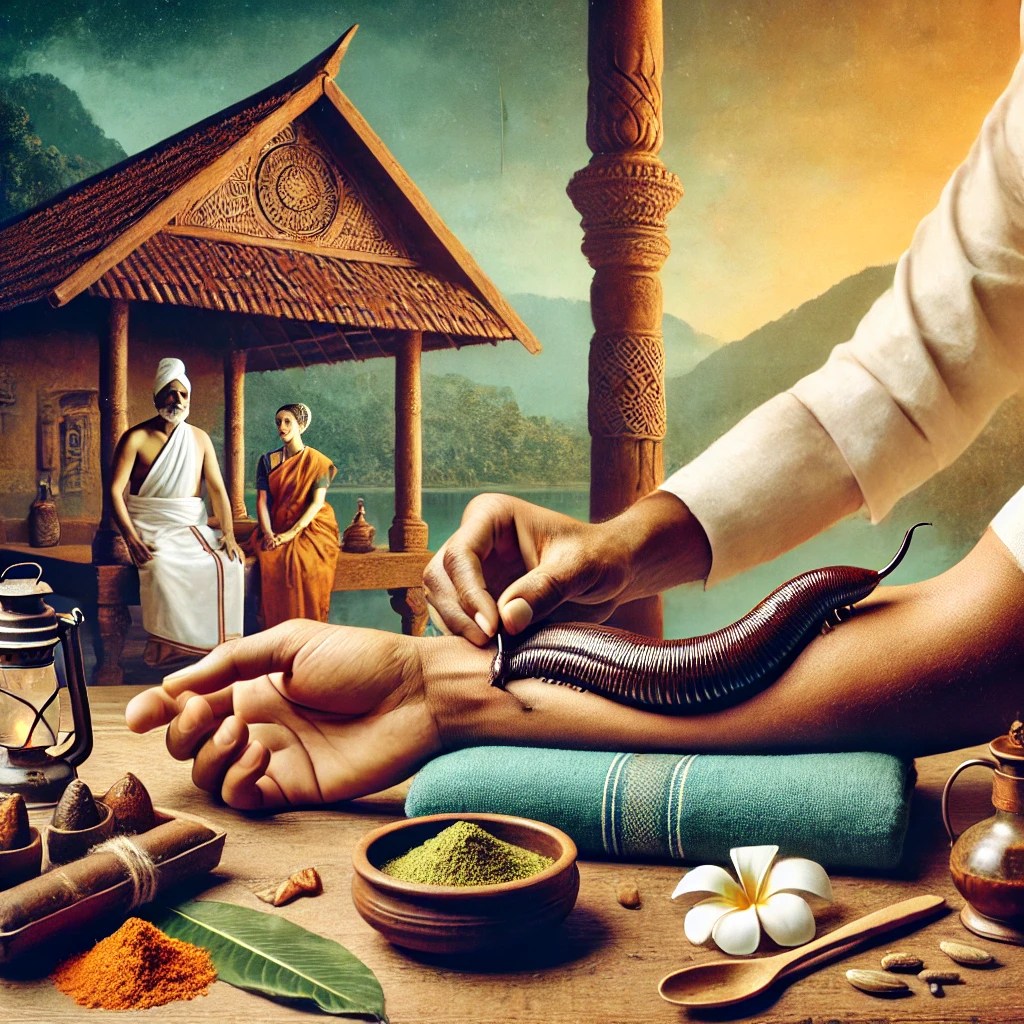
रोगी के शरीर में जहां जलोका लगानी हो, वहां पर थोड़ा खुरच लेते हैं। फिर जलोका को उस जगह पर पकड़ाते हैं।
अगर जलोका उस जगह पर ना पकड़े, तो क्रम से:
- क्षीर बिंदु
- शोणित बिंदु
- चीरा लगाते हैं।
इतना करने के बाद भी जलोका नहीं पकड़ती है तो दूसरी जलोका का प्रयोग करते हैं।
रक्त पान करते समय:
रक्त पान करती जलोका की आकृति अश्व खुर आकृति की तरह होती है।
रक्त पान करने की जगह पर अगर तोद कण्डू मिलने लगे, तो समझें कि जलोका शुद्ध रक्त का पान कर रही है और यही समय होता है जलोका को हटाने का।
जलोका हटाने की प्रक्रिया:
- जलोका हटाने के लिए उसके मुख पर मधु या सेंधव नमक का चूर्ण डालते हैं।
- जलोका हटाने के बाद उसको अनुलोम विधि से वमन करा देते हैं और फिर उसको घड़े में डाल देते हैं।
- एक बार में प्रयोग की हुई जलोका को दुबारा प्रयोग करने में 7 दिन का अंतर होना चाहिए।
जलोका कृत घाव की देखभाल:
- घाव को ठंडे पानी से धोकर, घृत का अभ्यंग कर देते हैं।
विशेष जानकारी
जलोका लगाने की जगह से एक हस्त प्रमाण तक के रक्त का पान कर सकती है।
(शारंगधर संहिता)
In English…
Acharya Sushruta has considered leeches as the most effective among the 14 Anushastras (secondary surgical instruments).
(“Jaloka Anu Shastranam” – Charaka Sutra 25)
Leech therapy is considered the most useful and gentle method of bloodletting (Raktamokshana) for people who are sensitive, such as kings, delicate individuals, children, the elderly, or those who are afraid of surgical procedures.
Types of Leeches
The Sushruta Samhita describes 12 types of leeches, categorized into two groups:
- Poisonous (Savisha) – 6 types
- Non-poisonous (Nirvisha) – 6 types
Names of Poisonous Leeches:
- Krishna
- Karbura
- Alagarda
- Samudrika
- Gochandana
- Indrayudha
Names of Non-poisonous Leeches:
- Kapila
- Pingala
- Mushika
- Shankumukhi
- Pundarikamukhi
- Savarika
Symptoms of a bite from poisonous leeches include needle-like pain, itching, burning, fainting, swelling, and fever.
To treat these symptoms, Acharya Sushruta prescribes the use of a medicine called “Mahagada” through nasal administration (Nasya), oral consumption (Pana), and topical application (Alepana).
Acharya Vagbhata emphasizes the treatment of poisonous leech bites with “Visha Pitta Rakta Hara” therapy.
Types of Leeches According to Acharya Harit:
- Kalika
- Dhumra
- Rohini
- Indrayudha
Leech Measurements
Acharya Sushruta mentions the ideal size of non-poisonous leeches (Savarika) as 18 angulas (approximately 13.5 inches), which are used only for animals.
Acharya Vagbhata states that the maximum size of leeches should be 18 angulas, but for humans, leeches measuring 4 to 6 angulas (3 to 4.5 inches) are considered suitable.
Leech Collection Method
According to Acharya Sushruta, leeches should be collected from regions like Yavana, Pandya, Sahya, and Potana. The best leeches for bloodletting are non-poisonous ones that are large, robust, and feed quickly.
Acharya Vagbhata suggests that the ideal season for collecting leeches is Sharad Ritu (autumn), as the water in ponds during this season is clean and fragrant, which is favorable for non-poisonous leeches.
After collection, leeches are stored in a water-filled pot and fed with appropriate substances.
Care Tips for Leeches:
- Change the water every 3 days.
- Replace the pot every 7 days (Acharya Vagbhata recommends every 5 days).
Leech Application Method
Leeches are particularly effective in removing Pitta-dominated impure blood.
- Preparation of the Patient:
- Perform oil massage (Snehan) and sweating therapy (Swedan).
- Coat the leeches with a paste made of turmeric and mustard, as suggested by Acharya Sushruta, to invigorate them.
- Alternatively, Acharya Vagbhata advises immersing leeches in water mixed with turmeric and mustard to cleanse their digestive tract, which enhances their ability to suck blood effectively.
- Application on the Patient:
- Slightly scratch the area where the leech is to be applied.
- If the leech does not latch on, use milk, blood drops, or small incisions to attract it. If it still doesn’t attach, use a different leech.
- Observing Bloodletting:
- During bloodletting, the leech’s mouth swells into a shape resembling a horse’s hoof.
- If itching and tingling occur at the site, it indicates the leech is extracting impure blood.
- Removing the Leech:
- Sprinkle honey or rock salt powder on the leech’s mouth to detach it.
- Post-Procedure Care:
- Induce vomiting in the leech (Anuloma Vamana) to clean its digestive tract before returning it to the pot.
- Ensure a gap of 7 days before reusing the same leech.
- Wash the wound with cold water and apply ghee to the affected area.
Note:
A leech can consume blood up to one hand-span (hasta pramana) from the application site.
(Reference: Sharangdhar Samhita)
 Ayurvedic Ways
Leave a comment